

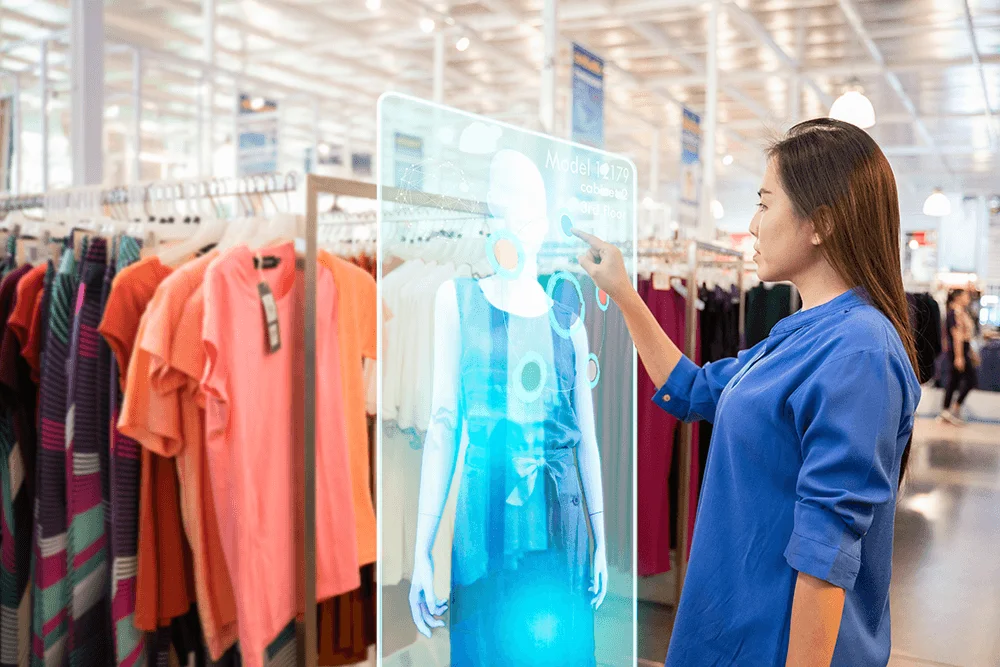
The global retail landscape is undergoing a structural evolution that is fundamentally rewriting how brands interact with consumers. For decades, the industry operated under a relatively simple binary model divided between physical brick-and-mortar storefronts and traditional electronic commerce websites. Today, that divide has completely collapsed. Driven by rapid technological integration, shifting consumer behavioral patterns, and a demand for hyper-personalized experiences, retail is transforming into a borderless, multi-dimensional ecosystem.
Modern consumers no longer view shopping as a transactional task tied to a specific physical location or device. Instead, they expect commerce to happen seamlessly in the background of their daily lives, blurring the lines between social interaction, digital media, and physical environments. For brands and retailers, adapting to these emerging trends is no longer a matter of gaining a competitive edge; it is a fundamental requirement for long-term commercial survival.
The Omnichannel Architecture and Unified Commerce
The most significant structural shift in modern retail is the transition toward absolute omnichannel execution, frequently referred to as unified commerce. Historically, brands operated separate organizational silos for their physical stores, online websites, and mobile applications, often resulting in fragmented pricing, disjointed inventory data, and friction for the end consumer.
Unified commerce eliminates these internal barriers by consolidating all operational data into a single centralized engine. This allows inventory levels, customer purchasing histories, and pricing matrices to update globally in real time. The consumer experience becomes completely fluid, enabling shoppers to move between physical and digital touchpoints without structural interruption.
This unified approach has popularized several foundational shopping modalities that consumers now view as standard expectations.
- Buy Online, Pick Up In Store: This mechanism allows shoppers to browse expansive digital catalogs from home, secure their items instantly, and collect their purchases at a local retail outlet within hours, completely bypassing traditional shipping fees and delivery delays.
- Curbside Fulfillment: A logistics model where store employees deposit purchases directly into a customer’s vehicle, providing a contactless, frictionless fulfillment loop that optimizes convenience for busy consumers.
- Endless Aisle Integration: When a specific size or color variant is out of stock at a physical location, associates utilize in-store digital terminals or tablets to instantly order the product from a centralized fulfillment hub and ship it directly to the customer’s home.
Contextual Commerce and the Rise of Social Shopping
The path to purchase has changed significantly. In the traditional retail model, a consumer identified a need, searched for a product, visited a storefront or website, and completed a transaction. The modern paradigm relies on contextual commerce, a strategy that embeds shopping opportunities directly into the natural environments where consumers spend their leisure time.
The Domination of Social Media Marketplaces
Social media platforms have evolved from simple communication utilities into fully functional digital shopping malls. Rather than serving merely as discovery engines that redirect traffic to external websites, major social applications feature integrated checkout systems.
Consumers can watch a short video demonstration, tap on an embedded product tag, and complete a secure purchase using saved payment credentials without ever leaving the application interface. This elimination of operational steps dramatically reduces cart abandonment rates and capitalizes on spontaneous consumer inspiration.
Live-Stream Commerce and Interactive Video
Originating as a dominant force in Asian retail sectors, live-stream shopping has firmly established itself as a primary global engagement channel. Brands host live interactive broadcasts where product experts or digital creators showcase merchandise in real time, demonstrating clothing fit, detailing ingredient profiles, and hosting live question-and-answer segments. Viewers can interact via a live text feed, influence the direction of the presentation, and purchase featured items instantly via interactive on-screen overlays, creating a dynamic blend of entertainment and transactional efficiency.
Spatial Computing and Virtual Try-On Ecosystems
One of the largest operational challenges for digital retailers has always been product uncertainty, particularly in the apparel, cosmetics, and home furnishings sectors. If a consumer cannot physically touch a product, test its texture, or verify its dimensions, they are naturally more hesitant to finalize a purchase. Furthermore, this uncertainty leads to high return rates, which introduce massive logistical costs and squeeze retailer profit margins.
To solve this problem, the retail industry is leveraging spatial computing and advanced augmented reality technologies. Using standard smartphone cameras or specialized computing headsets, virtual try-on software translates physical spaces and human body geometry into highly accurate digital canvases.
In the beauty sector, augmented reality algorithms scan a consumer’s facial architecture in real time, allowing them to instantly test different cosmetic shades, lipsticks, and skin treatments digitally. In home design, spatial modeling software projects three-dimensional, perfectly scaled replicas of furniture directly into a customer’s living room, allowing them to verify whether a sectional sofa fits their true physical layout before delivery.
For apparel, advanced scanning tools map body measurements to digital garment assets, simulating how fabric draping handles different movement patterns. This integration builds high consumer confidence and systematically lowers return volumes.
Data-Driven Personalization and Predictive Fulfillment
The modern consumer expects brands to understand their personal tastes, stylistic preferences, and purchasing cycles. Standardized, mass-market email distributions and generic homepages are increasingly ineffective. The future of retail relies on deep data-driven personalization powered by advanced predictive algorithms.
By analyzing historical browsing patterns, past purchasing frequencies, local weather forecasts, and contextual data signals, retail systems construct individual user experiences. When a shopper logs into an online marketplace, the system dynamically alters the product layout, highlighting items that align with their specific aesthetic choices and sizing requirements.
Furthermore, forward-looking logistics systems are moving toward predictive fulfillment models. By tracking long-term consumption rates for household essentials or personal care items, automated systems can anticipate exactly when a consumer is running low on a specific product. The retailer can then automatically package the item at a regional hub and deploy it to a local distribution center before the customer even submits the order, paving the way for hyper-efficient, same-day delivery networks that rival the speed of physical grocery trips.
The Transformation of the Physical Storefront
The rise of digital commerce does not signal the death of the physical retail store; instead, it forces a complete re-imagining of its operational purpose. Storefronts are shifting away from serving as passive, high-volume inventory warehouses toward functioning as experiential brand hubs and critical decentralized fulfillment nodes.
Modern physical locations dedicate significant square footage to interactive brand experiences, showrooms, and personalized consultation clinics where consumers can build deep relationships with the brand identity. Concurrently, the back-of-house operations are being highly optimized.
Physical retail stores increasingly operate as micro-fulfillment centers, utilizing advanced tracking technologies like radio-frequency identification tags to maintain absolute inventory accuracy. When an online order is placed within a specific zip code, the system routes the fulfillment task to the nearest physical storefront rather than a distant national warehouse, utilizing local courier networks to deliver the item within hours and drastically lowering the overall carbon footprint of last-mile logistics.
Frequently Asked Questions
What is the specific difference between omnichannel retail and multichannel retail?
Multichannel retail means a brand operates across several independent platforms, such as a physical store, a website, and a social media page, but treats each channel as a separate operational silo with its own disjointed data. Omnichannel retail, conversely, completely integrates all platforms behind a unified database. This ensure that inventory counts, pricing updates, customer profiles, and loyalty reward points adjust globally in real time, providing a completely seamless experience across every digital and physical touchpoint.
How do radio-frequency identification tags improve retail supply chain logistics?
Radio-frequency identification tags use electromagnetic fields to automatically identify and track product data without requiring a direct line of sight. Unlike traditional linear barcodes that must be manually scanned one by one, an associate using an electronic reader can instantly count hundreds of items on a retail floor or within a delivery crate simultaneously. This technology reduces human inventory errors, prevents out-of-stock situations, and allows brands to execute rapid, high-accuracy fulfillment for local deliveries.
Why are modern brands increasingly prioritizing direct-to-consumer sales over traditional wholesale channels?
Prioritizing direct-to-consumer sales allows brands to bypass traditional wholesale middlemen like department stores, giving them absolute control over their brand messaging, product presentation, and consumer pricing strategies. Crucially, selling directly to the end consumer grants the brand complete ownership of valuable first-party customer data and purchasing behavior insights, which enables them to design highly optimized product lines and run hyper-personalized marketing campaigns.
What is headless commerce architecture and why are retailers adopting it?
Headless commerce describes a modern software architecture where the front-end user interface of an online store is completely decoupled from the back-end commerce engine that handles database management, payments, and shipping logistics. Retailers adopt this framework because it allows their development teams to rapidly update, customize, and experiment with the visual shopping experience across websites, mobile applications, and smart devices without risking disruptions to the underlying operational data backend.
How do automated checkout systems function in physical retail environments?
Automated checkout systems utilize an advanced network of ceiling-mounted computer vision cameras, weight sensors embedded directly within shelf structures, and machine learning algorithms. When a shopper enters a storefront, they scan a mobile application code at an entry turnstile. As they pick up items from the shelves, the system automatically adds the merchandise to a virtual shopping cart. When the customer finishes, they simply walk out of the store, and the system bills their saved payment method automatically, eliminating checkout lines.
What are the main advantages of dynamic pricing models in modern retail?
Dynamic pricing models utilize automated software tools to adjust product prices in real time based on fluctuating market variables, such as shifting consumer demand, current competitor pricing strategies, available inventory volumes, and local weather patterns. This approach allows retailers to maximize profit margins during peak demand cycles, clear out slow-moving inventory by offering automated discounts during off-peak windows, and remain highly competitive in fast-moving digital marketplaces without requiring manual intervention from corporate analytics teams.