

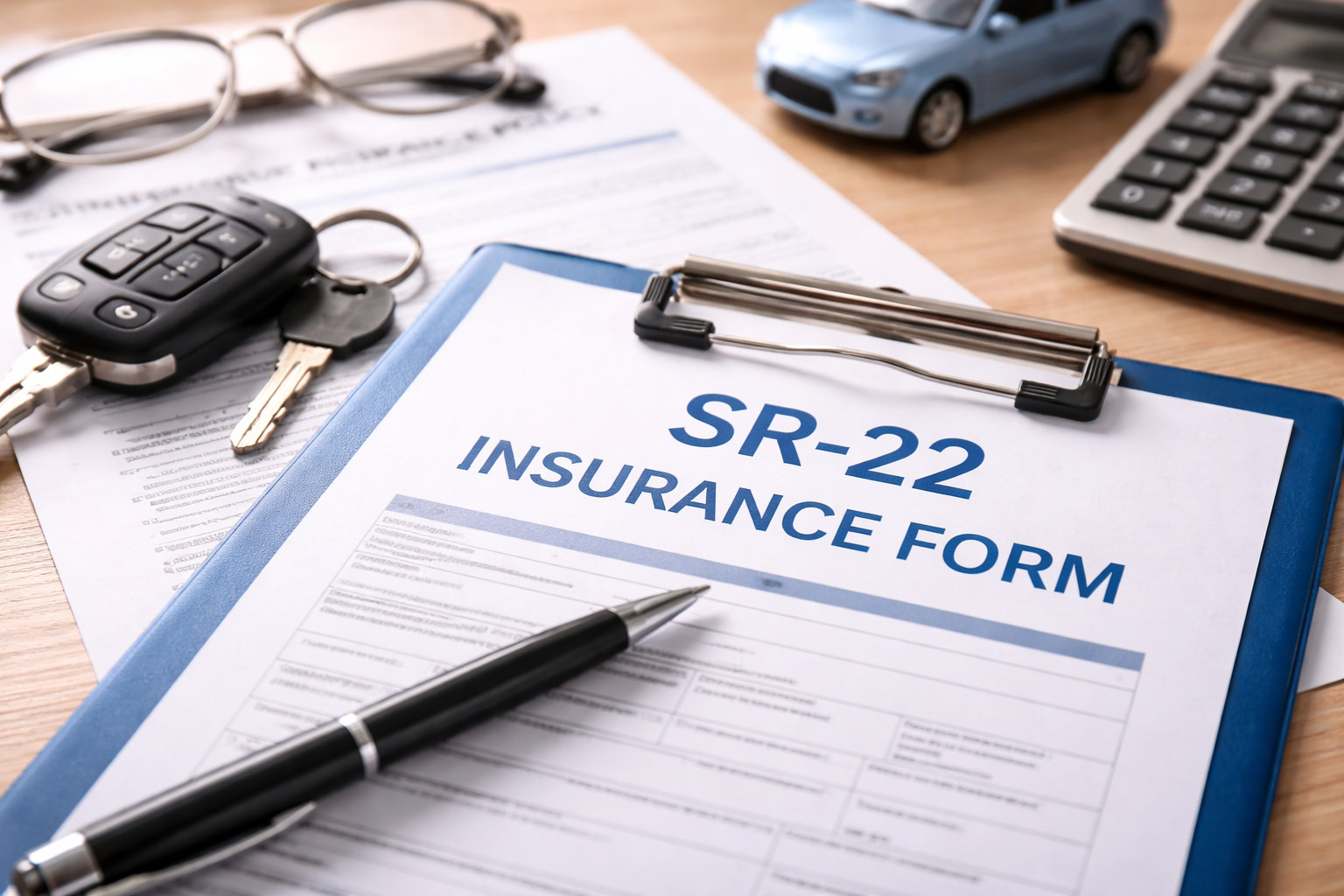
Getting a non-owner SR-22 in Florida comes down to how much of the process you want to handle yourself. DIY may suit straightforward cases, while an agent can be worthwhile when the driving record is complicated, household vehicle access is unclear, or an FR-44 is involved.
What non-owner SR-22 is in Florida
An SR-22 is not insurance you buy on its own. It is a certificate your insurer files with the Florida DHSMV to prove you carry the liability coverage required for your case. You cannot file it yourself. The insurer files the form, not you. Your job is to buy and maintain a qualifying auto policy so the filing remains in force.
Drivers who don’t own a car may be able to meet that requirement with non-owner auto insurance. The policy supports the SR-22 filing and provides liability coverage when you drive a car you don’t own. It won’t repair a borrowed car after a crash or provide collision and comprehensive coverage for a car you don’t have.
The required liability coverage depends on the circumstances behind the filing and the requirements stated in your official notice. Your policy must meet or exceed those requirements. If your case involves a DUI conviction, Florida may require an FR-44 instead. FR-44 requirements differ from SR-22 requirements, so check the limits and filing instructions shown on the official notice.
A non-owner policy generally covers only the person named on it. It does not automatically extend coverage to a roommate or spouse who lives with you. Carrier terms and household-driver rules vary, making it important to review the policy rather than assume another person is covered.
The filing period in Florida is often measured in years, but the required duration depends on the case and official instructions. If coverage ends during that time, the insurer may notify the state electronically, which can affect license status or reinstatement. Confirm the applicable period and consequences with the DHSMV and insurer.
Because the filing is tied to an active policy, maintaining coverage matters as much as obtaining the initial certificate. Payment deadlines, renewals, and changes in vehicle access can all affect whether the policy continues to qualify.
Who fits the non-owner profile
Non-owner SR-22 is intended for a specific group: you don’t own a car, don’t regularly use a car kept at home, and need to drive borrowed or rented vehicles occasionally while meeting an SR-22 requirement.
Occasional use is the key. Borrowing a friend’s sedan for a weekend trip may fit a non-owner policy. Renting a car for work travel may also be covered, although rules vary by carrier and exclusions matter. Daily use of a partner’s car parked in your driveway is different. If a vehicle is regularly available, the carrier may expect it to be listed on an owner policy with you identified as a driver.
Don’t buy non-owner coverage without disclosing cars you regularly drive. Claims staff may consider where a car is kept, how often you use it, and who holds the keys. Regular access could create a coverage problem and may mean the policy is not suitable for your circumstances.
Household rules create another complication. If you live with someone who owns a car, most applications ask about it. Answer honestly. Claiming you have no access while regularly driving your spouse’s car creates a discrepancy that may surface later. An agent can discuss the arrangement with the carrier, while an online form may not provide enough room to explain it.
You also may not qualify if you sold a car that remains titled in your name. Title and registration matter. Until the sale is final and the plates are handled under state rules, confirm what coverage you need before cancelling the owner policy.
Five-question self-audit before you choose
A short self-check can help drivers decide how much assistance they need. Consider these five questions honestly before choosing between DIY shopping and an agent.
- Do you have zero cars in your household available for regular use?
2. Is your suspension connected to a DUI that may require FR-44 rather than SR-22?
3. Have you had a lapse or cancellation in the past two years?
4. Do you know how to confirm that an SR-22 was filed and accepted?
5. Are you willing to monitor renewal dates and payment deadlines for the required filing period?
The answers do not create a fixed pass-or-fail test. Instead, they identify issues that may need clarification before you buy, particularly household access, the filing type, and your ability to verify acceptance.
A DUI can change the required filing and available coverage, while a prior lapse makes it especially important to understand payment controls and continuity requirements. If you cannot confirm the filing or monitor renewals, having someone help with those tasks may be useful.
Be realistic about your time. Some drivers are comfortable managing paperwork, while others aren’t. Paying for help may be sensible if another coverage problem could interfere with reinstatement or affect your ability to drive for work.
How to compare quotes without missing the real cost
Shopping for SR-22 insurance differs from buying a standard auto policy. Premium is only part of the cost. You also need to consider filing fees, the down payment, installment charges, and the renewal term.
Use the same information for every quote, including identical liability limits and start dates. Select the non-owner option each time, or you may unknowingly compare an owner-policy price with a non-owner quote.
Comparing results through a Non-Owner SR-22 Quote can help you assess whether DIY pricing is competitive once filing support and term differences are included.
Several common issues can increase the actual cost over the required filing period. These four appear often with Florida non-owner filings.
First, a low premium combined with a large down payment and high installment fees may cost more than a higher premium with simpler billing. Request the total of all payments for the full quoted term.
Second, some carriers charge a separate filing fee in addition to the premium. It should appear in the policy or billing documents, so ask where it is listed if you cannot find it.
Third, tier placement after a DUI or repeated suspension can change the base rate. Two quotes may differ because they treat the same driving history differently. Check that each quote includes the correct violations.
Fourth, renewal timing matters. Non-owner policies may have different term lengths, and delayed payment or processing can create a coverage gap. Ask when renewals and any required continued filings are submitted.
Get each quote in writing with the limits, term length, and filing confirmation process clearly shown. Keep copies in case the DHSMV later shows no record of the filing.
What DIY looks like when it works
DIY does not mean filing state paperwork yourself. You shop for, apply for, and manage the policy without an intermediary, but a licensed insurer still files the SR-22 with the DHSMV.
Start by obtaining your driving record and reinstatement letter. You’ll need your full legal name, date of birth, driver license number, the start date of the filing requirement, and confirmation of whether the letter lists SR-22 or FR-44. If it says FR-44, use those instructions when requesting coverage and confirm that the insurer can provide the required filing.
Next, use a carrier website that allows you to select non-owner coverage from the beginning. Many quote tools begin by asking for vehicle details. Make sure the quote is actually for a non-owner policy rather than an owner policy with coverage for a specific car.
You’ll be asked about violations, suspensions, and household vehicles. Complete every field accurately. Omitting a roommate’s car or an old ticket may create a mismatch that affects underwriting, pricing, or coverage.
After binding coverage, confirm that the SR-22 was sent and accepted. Call the carrier or check your online account, ask for the filing date, and keep any available confirmation details with your reinstatement documents. Then set reminders for each payment and renewal.
DIY works best when you understand the official requirements, can answer the application accurately, and are prepared to manage payments and filing confirmation without help.
Rushing through a direct quote can lead to unsuitable coverage or unnecessary options. Review the policy details before paying.
When an agent is worth the extra step
An independent agent or broker may have access to high-risk carriers that don’t sell directly to consumers. This can matter after a DUI, repeated violations, or other factors that place you in the non-standard market.
FR-44 is a clear reason to consider help because its requirements differ from those of an SR-22. An agent can identify carriers that offer suitable coverage, compare the policy limits with your official notice, and arrange the filing for DHSMV acceptance.
Agents can also help when household access is unclear. Suppose you sold your car, your partner still commutes in theirs, and you borrow it on Sundays. A direct form may provide only a yes-or-no checkbox. An agent can explain the arrangement to underwriting and look for a suitable policy, reducing the chance of buying coverage that does not fit your actual use.
Prior lapses are another reason to get help. If your previous filing ended for nonpayment, confirm your current requirements with the DHSMV and insurer before purchasing a replacement policy. An agent can review the available payment options and explain how cancellation notices are handled. Choose a plan you can maintain.
Before committing, ask an agent which carriers they represent for non-owner SR-22, how they will confirm filing acceptance, which payment options reduce cancellation risk, and what happens if you gain access to a household car during the policy term. Clear answers can show whether they regularly handle these filings.
The value of an agent is the additional review and access to carriers, not the act of filing the certificate personally. The insurer remains responsible for submitting it.
The extra review takes time initially, but it may help prevent application errors, unsuitable coverage, or another interruption.
How to avoid a lapse and confirm your filing
A lapse can complicate reinstatement or create further license problems. Florida relies on electronic notices from insurers, so the state may learn about a cancellation quickly. Do not assume there will be a grace period.
Use autopay if you can keep enough money in the account. If cash flow is tight, choose an available due date that works with your income schedule and set alerts one week ahead. Keeping extra funds in the linked account can reduce the chance of a failed payment.
Confirm the first filing before driving. Wait for proof that the DHSMV accepted the SR-22, and ask the insurer for the filing date and any available reference number. Your reinstatement letter will state whether you must also pay a fee or provide proof in person. Court orders are separate from DHSMV requirements, and a judge may impose additional conditions.
If you recently sold a car, keep the owner policy active until the non-owner policy is bound and the required filing has been submitted. No gap between policies is the safest approach for maintaining continuous coverage. Even a brief interruption can be reported and may affect your filing requirement or license status.
Review borrowed-car and rental use each year. Tell your carrier if you begin driving a new roommate’s car. If you stop renting and start using a family car daily, you may no longer fit the carrier’s non-owner rules. Check policy fit at every renewal and after a move or marriage changes the household vehicles.
Avoid online businesses that sell an SR-22 certificate without an active liability policy. Florida filings must come from an authorized insurer and be tied to qualifying coverage. A document with no valid supporting policy won’t provide liability coverage after a crash.
Keep records for the full required period, including declarations pages, payment receipts, and filing confirmations. If a reporting or system error creates a disputed lapse, those documents can help you address it.
Choose the route you can maintain for the full filing period. Strong paperwork habits may support DIY, while an FR-44, household car access, prior cancellation, or complicated record may justify an agent’s help. In either case, continuous qualifying coverage and a confirmed filing are what matter.