

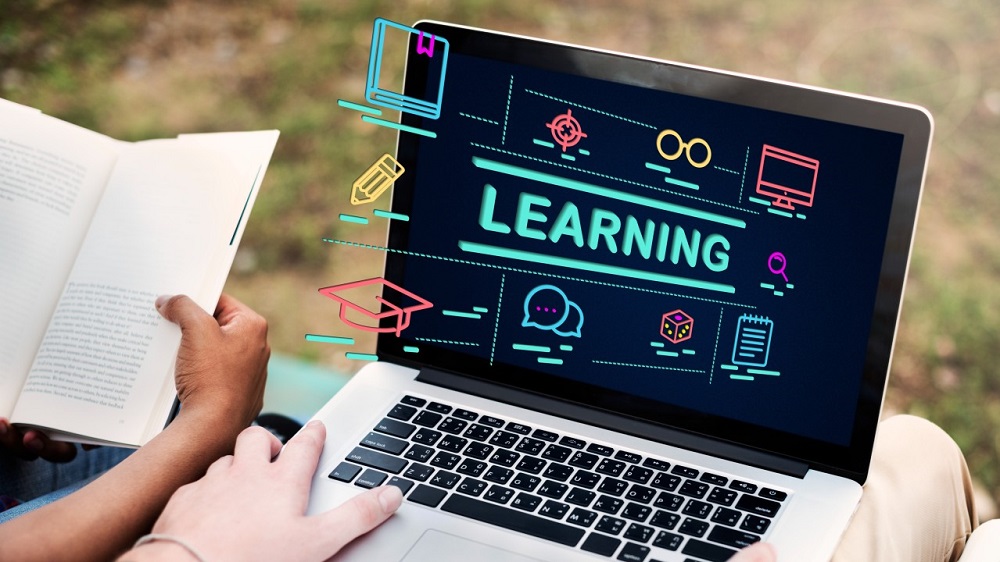
The concept of education as a finite phase of life confined to youth and formal schooling is entirely obsolete. Historically, an individual could complete a high school or university degree, enter the workforce, and rely on that foundational knowledge for the remainder of a multi-decade career. Today, the velocity of technological disruption, macroeconomic volatility, and the rapid evolution of industry structures have fundamentally rewritten the social contract of labor.
Continuous learning is no longer an optional pursuit for the exceptionally ambitious; it has become a baseline requirement for economic survival and personal autonomy. In a globalized economy driven by automation and sophisticated digital tools, the capacity to unlearn outdated methodologies and rapidly acquire new competencies is the ultimate competitive advantage. Embracing an ongoing educational framework allows individuals to navigate structural shifts with resilience, transform operational uncertainties into professional opportunities, and maintain active intellectual engagement throughout their lives.
The Technological Catalyst and the Half-Life of Knowledge
The primary driver behind the necessity of continuous education is the exponential rate of technological development. The global integration of advanced computational tools, machine learning, and workflow automation has fundamentally altered the structural tasks that define modern employment.
Economists and workforce analysts frequently refer to the half-life of knowledge, a metric that measures the time it takes for half of the facts or skills in a specific field to become completely outdated. Across engineering, technology, finance, and healthcare, this window has shrunk from decades to just a few years.
When automation systems absorb repetitive administrative and operational tasks, the demand shifts dramatically toward high-level cognitive skills. Employees cannot protect their positions by resting on historical achievements.
Survival in the modern labor landscape requires a proactive commitment to upskilling, which involves learning new skills to enhance performance in an existing role, and reskilling, which entails training for an entirely different professional path. By actively engaging with modern digital infrastructure and technical training, workers ensure they remain essential assets within their organizational ecosystems.
Economic Resilience and Personal Agility
The modern career path is rarely a linear progression within a single enterprise. Corporate flattening, shifting industry demands, and macroeconomic cycles mean that professional volatility is a standard operational factor. Individuals who view their education as complete are highly vulnerable to sudden market corrections or industry downsizing.
De-Risking through Skill Diversification
A diverse, continuously updated skill set serves as a personal insurance policy against economic downturns. When an industry experiences structural displacement, professionals who have maintained a habit of learning can pivot seamlessly into adjacent emerging sectors.
For instance, a traditional marketing coordinator who actively studies data analytics, audience segmentation, and behavioral modeling can transition into a specialized digital growth role, completely avoiding the vulnerability associated with obsolete print legacy systems.
The Rise of the Micro-Credential
The architecture of adult education has shifted to accommodate the busy schedules of working professionals. Instead of requiring multi-year commitments to traditional degree programs, the educational landscape now leverages targeted micro-credentials.
- Professional Certifications: Short, intensive validation programs designed to prove competence in specific modern software platforms, project management frameworks, or technical methodologies.
- Bootcamps and Immersive Technical Training: Specialized, highly applied courses that bypass theoretical fluff to teach marketable skills like data science or full-stack software development in a condensed timeframe.
- Modular Digital Learning: Structured online coursework that allows individuals to build customized learning tracks, acquiring specific pieces of knowledge exactly when their professional responsibilities demand them.
Cognitive Health and Neuroplasticity
Beyond the clear economic and professional motivations, continuous intellectual stimulation plays a critical role in maintaining long-term psychological and physical well-being. For decades, traditional neuroscientific consensus suggested that the human brain became structurally fixed after early adulthood. Modern neuroscience has completely overturned this assumption through the validation of neuroplasticity.
Neuroplasticity is the brain’s inherent capacity to reorganize itself by forming new neural pathways and structural connections throughout life. When an individual tackles challenging new subjects, such as learning a foreign language or mastering a complex musical instrument, the brain responds by physically altering its neural architecture.
This continuous cognitive engagement builds cognitive reserve, a structural buffer that improves the brain’s resilience against age-related decline and significantly delays the onset of neurodegenerative symptoms. Intellectual curiosity is quite literally a foundational pillar of systemic long-term health.
Demarginalization and Global Access to Knowledge
The democratization of educational infrastructure has broken down the historical financial and geographic barriers that once restricted access to top-tier knowledge. In the past, high-quality education was heavily guarded by elite institutional gatekeepers, requiring substantial financial wealth and physical proximity to major urban centers.
The proliferation of open-source knowledge platforms, institutional digital archives, and global learning networks has leveled the playing field. A dedicated student located in a rural, remote community can access the exact same instructional syllabi, lecture series, and research literature as an individual physically sitting in a lecture hall at an elite university.
This massive shift allows historically marginalized populations to bypass traditional socioeconomic hurdles, acquire highly advanced specialized skills independently, and compete directly in the global digital economy. The only true limiting factors in this new paradigm are personal discipline, focused curiosity, and reliable internet connectivity.
Structuring a Sustainable Personal Learning Ecosystem
Transitioning into a successful lifelong learner requires moving past erratic, sporadic reading habits toward a highly disciplined, structured personal ecosystem. Relying entirely on spontaneous bursts of inspiration is an ineffective way to build true competence.
First, an individual must execute a periodic self-audit to identify clear gaps between their current capabilities and the emerging demands of their chosen field. Once these areas are identified, specific blocks of time must be formally integrated into the weekly schedule, treating learning sessions with the exact same priority as high-stakes client meetings or critical professional deadlines.
Crucially, deep learning requires active experimentation rather than passive consumption. True mastery is achieved when theoretical concepts are instantly applied to real-world projects, whether through building a personal application, writing analysis pieces, or optimizing an existing operational workflow at a current place of employment.
Frequently Asked Questions
How can a working professional balance continuous learning with a demanding full-time job?
Achieving a sustainable balance requires shifting away from massive, overwhelming study sessions toward consistent, micro-learning habits. Dedicating just twenty to thirty minutes every single day to structured reading, a technical video module, or code practice accumulates to over one hundred hours of focused development annually. Utilizing commute times for educational podcasts or waking up slightly earlier to engage with difficult course material before checking work communications ensures steady progress without causing professional burnout.
What is the precise cognitive difference between active learning and passive information consumption?
Passive consumption involves reading articles, watching videos, or scrolling through educational content without performing secondary cognitive processing, which leads to rapid memory decay. Active learning demands cognitive exertion through techniques like retrieval practice, spaced repetition, and real-world application. When you summarize concepts in your own words, solve complex practice problems, or immediately build a project using new information, you force your brain to strengthen the neural pathways associated with that specific knowledge, ensuring long-term retention.
Are employers genuinely valuing micro-credentials over traditional university degrees?
The valuation depends heavily on the specific industry, but the corporate landscape is shifting rapidly toward skill-based hiring metrics. While traditional foundational fields like law, medicine, and structural engineering strictly mandate university degrees, sectors such as software development, digital design, project management, and data analytics place immense weight on demonstrable capabilities. A robust portfolio of completed projects, coupled with verified industry certifications from recognized technology leaders, frequently carries equal or greater weight than a generalized degree lacking practical application.
How does continuous education impact an individual’s earning potential over a career?
Statistical data consistently demonstrates a direct, positive correlation between ongoing skill acquisition and total lifetime earnings. Professionals who continuously update their competencies are significantly better positioned to secure internal promotions, negotiate higher salary steps, and pivot into highly lucrative emerging niches. Furthermore, continuous learners experience vastly reduced periods of structural unemployment, as their modern skill sets remain highly attractive to hiring managers even during broader economic contractions.
What strategies can older adults utilize to overcome initial friction when learning complex digital tools?
Older adults should approach modern digital tools by breaking the interface down into small, isolated functional goals rather than attempting to master the entire system at once. Leveraging step-by-step visual tutorials, keeping physical written logs of specific navigation paths, and explicitly focusing on how the tool solves an immediate, practical problem reduces cognitive overload. Embracing a growth mindset and recognizing that technical errors are merely safe, instructive diagnostic feedback loops helps dismantle the initial anxiety associated with unfamiliar technology platforms.
Why is unlearning considered one of the most difficult aspects of adult education?
Unlearning is highly challenging because cognitive habits and professional methodologies practiced over many years become deeply ingrained behavioral tracks in the brain. When a new system invalidates a process that previously brought an individual career success, it triggers natural cognitive dissonance and defensive psychological resistance. Successful unlearning requires absolute intellectual humility, the willingness to intentionally abandon comfortable, obsolete frameworks, and the emotional resilience to accept being a beginner again in a changing environment.